
Guild Wars 3 Momentum Combat
Wall-run, glide, slam, and Guild Wars build-making from the Gamescom demo.
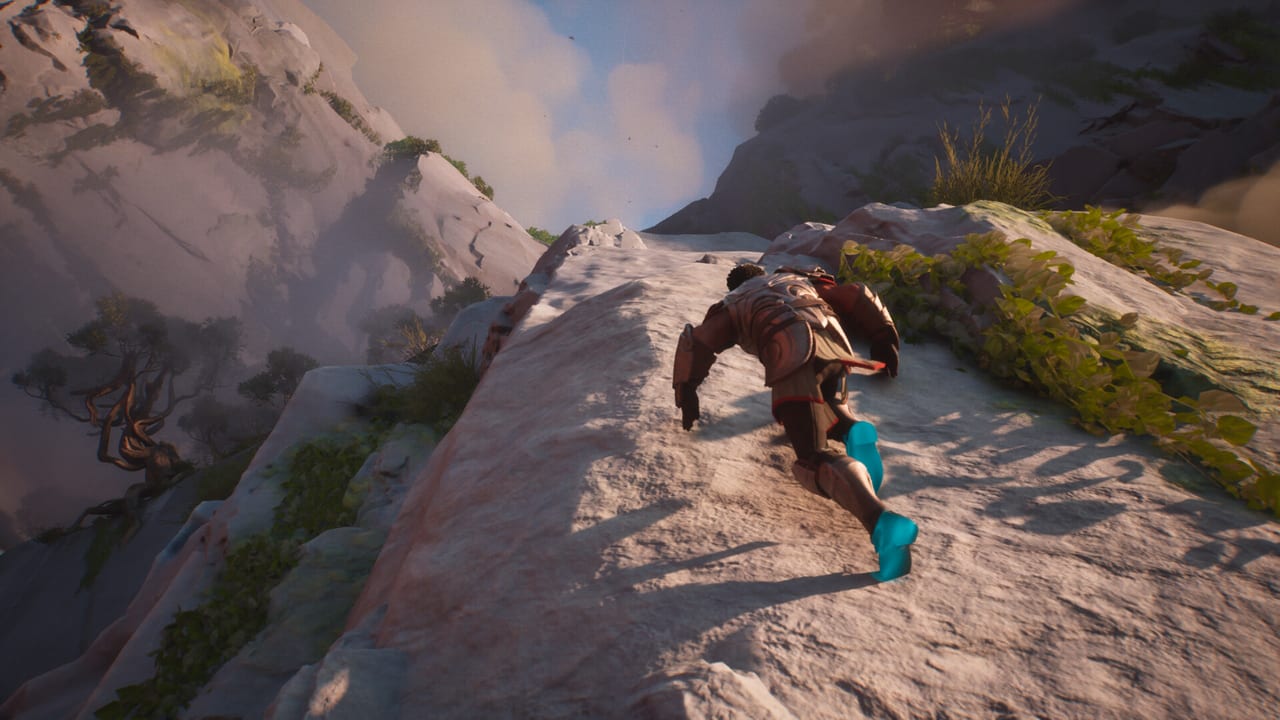
Guild Wars 3 combat is action RPG motion with Guild Wars build-making sitting on top. The Gamescom 2026 demo did not show a finished skill planner. It showed a rule: speed is a resource. If you sprint, wall-run, glide, or mantle, that velocity is supposed to still exist when you hit someone. If you stand still, you are playing a weaker version of the same profession.
This page is the mechanical deep dive. For the minute-to-minute loop and controller layout, stay on How to Play. For class pages, use the classes hub. For how this differs from Guild Wars 2’s action camera and combo fields, read vs Guild Wars 2. The game is still upcoming; nothing here is a live patch note.
How momentum transfers and how it spends
Kevin Stocker described movement and combat as one development accident that they then kept. Transitional attacks out of wall-runs and glides felt better than planted swings, so professions were built around those moments. Momentum is not a buff icon you stack in a menu. It is your current velocity, handed from sprint to jump to glide to mantle, then cashed in as damage, radius, knockback, or travel distance.
Spending it has several confirmed shapes. You can ram enemies into cliff walls to stun them. You can kick them off ledges. Larger enemies ignore small pushes; Rampage-style elites and big falls are how you move the heavy ones. Enemies can slam you into geometry too, so the map is not a pretty backdrop. Fall damage on foes is real enough that ArenaNet has not finished the loot-on-a-cliff problem.
Stamina limits wall-runs and glides. You cannot live in the air forever. That is the tax that stops momentum from becoming an infinite damage cheat. Elite skills charge through combat actions rather than waiting on a long out-of-combat cooldown. Warrior Rampage was the example: damage on activation, then faster attacks, stronger pushes, and higher jumps, which create more momentum to spend. Skills may eventually mix a recharge with an energy cost; that system is not locked.
Conditions are meant to be visible in the world instead of a stack of tiny UI pips. Preview coverage described cold attributes freezing a target until it can be shattered, and fire thawing frozen allies. Spiders in the demo webbed players, slowing both movement and attacks, until fire burned the webs. That is counterplay you can see, which is the point of a cleaner HUD. Do not treat those examples as a complete condition list.
Profession expressions: Warrior, Necromancer, Ranger
Only three professions are confirmed. Do not add Guardian, Elementalist, or anything else to this page.
Warrior in the demo was close-range and vertical. Aerial slam damage and radius scale with fall velocity. A hop-slam is small. A wall-run bomb is large. The shield blocks, and it can also crouch into a springboard so an ally launches into the air. Fire skills buffed nearby weapons and burned spider webs. Rampage is the shown elite. A tank-oriented Warrior can use momentum less than a slam-oriented one; Johanson said build choice changes how much the system matters.
Necromancer joined with a scythe. Lifesteal scythe attacks travel farther with more momentum. Necrotic Traversal is the named movement ability. Minions were cited as a tanking method: the Necromancer does not have to be the body on the point if the pets hold threat. In the Dhuum temple, the Necromancer used the Warrior’s shield as a springboard. That is the multiplayer combo pitch: professions physically interact, not just overlay fields.
Ranger was described, not fully shown. Stocker’s line was suspension rather than slamming: stay airborne, rain attacks from height, treat vertical space as a stance. Airborne slow-fall bow shots were called “Legolas-style.” A Polar Vortex skill was mentioned in the Gamescom Q&A as something other players can ride for altitude and a cold attribute on weapons. Until we see a Ranger pass, treat those as design intents, not rotations.
Shared movement is the same kit. The professions spend it differently. That is how ArenaNet wants three names to feel like three games without splitting the animation budget into unrelated movement systems.
Roles, threat, and group combos
Guild Wars 2 stepped away from a strict tank-healer-damage trinity. Guild Wars 3 is stepping back toward defined roles without copying a theme-park raid lockout. Johanson said there will be more defined abilities to play tank, damage, or healer. A Warrior shield tank and a Necromancer minion tank are different solutions. Threat-based tanking is in; the old Guild Wars 2 “everyone is a damage hybrid” assumption is out. Details of healing specs are unpublished. Read roles as the planning page, not a live tier list.
Group size language: initial teams are expected around four, with larger content around 20 players on screen in combat. Cities can show more. That 20 is the cap Colin mentioned casually for combat, not a promise of a 20v20 PvP mode. PvP is confirmed. World vs. World scale is not. There are no Heroes or Henchmen to fill a party. If you liked Guild Wars 1 henchmen, you will need real players or you will solo.
Combos are player-to-player. Shield springboards, fire sharing onto an ally’s weapon, riding a Ranger vortex for height, stacking cold until a target freezes: those are the examples. Team composition will matter for hard content because some interactions need specific professions. Open world is expected to allow more on-the-fly loadout changes than dungeons. Skills can be discovered in the world rather than all unlocked in a trainer list; that is a Guild Wars 1 echo, not a datamined tree.
Encounter design and scale
Johanson named three fight pillars: positioning and terrain, weak points that need momentum to reach, and Guild Wars 1-style enemy weaknesses. The Mavenburner backpack explosion is the weak-point example. Spiders plus fire is the counterplay example. Knocking cultists off Dhuum temple ledges is the terrain example. Large fights should mix those instead of “stand in the circle.” There are no Guild Wars 2-style map meta-events. Raids and other endgame were spoken of as planned; names and bosses are not public.
~20 players in large combat is the design center so action-camera fights stay readable. That is also why Guild Wars 3 is not trying to be Guild Wars 2’s megaserver zerg game. Megaserver-like sharding still exists, with extra complexity because the world has fewer loading screens. If you want fifty people on a dragon, that fantasy stays in Guild Wars 2. If you want a party that wall-runs a temple and bombs a weak point, that is this game.
Build-making is the other half of “how to play combat” and it is the half we have not seen. Until the Fall 2027 beta, practice the half we have: watch vertical lines, notice when a slam comes from a wall, and pick a first profession from the three confirmed names. Then return to How to Play for input, Getting Started for prep, and the Guides Hub for the rest.
Frequently Asked Questions
Quick answers for Guild Wars 3 players waiting on the Fall 2027 beta.
Does momentum actually change damage?
Yes, in the Gamescom demo. Warrior aerial slams scale with fall velocity, and Necromancer scythe travel and lifesteal scale with momentum. See How to Play for the loop.
Which professions are confirmed?
Warrior, Necromancer, and Ranger only. Open the classes hub, then Warrior, Necromancer, and Ranger.
Is Guild Wars 3 a trinity MMO?
Roles are closer to a trinity than Guild Wars 2, with threat-based tanking and a possible Necromancer minion tank. It is not a rigid copy of a theme-park raid lock. Read roles.
How many players fight together?
Large combat is about 20 players. Cities can show more. There are no Guild Wars 2-style meta-events and no WvW. Compare that split in vs Guild Wars 2.
Can I tank as a Necromancer?
Johanson cited minions as a tanking method, different from a Warrior shield. Nothing else is locked. Track class pages from the classes hub as more footage lands.